
the journal
Google and Apple Are the EU's Bitches
The European regulatory paradox: privacy, digital freedom and the cost of doing business.
kleosvic · Nov 6, 2026 · 13 min read
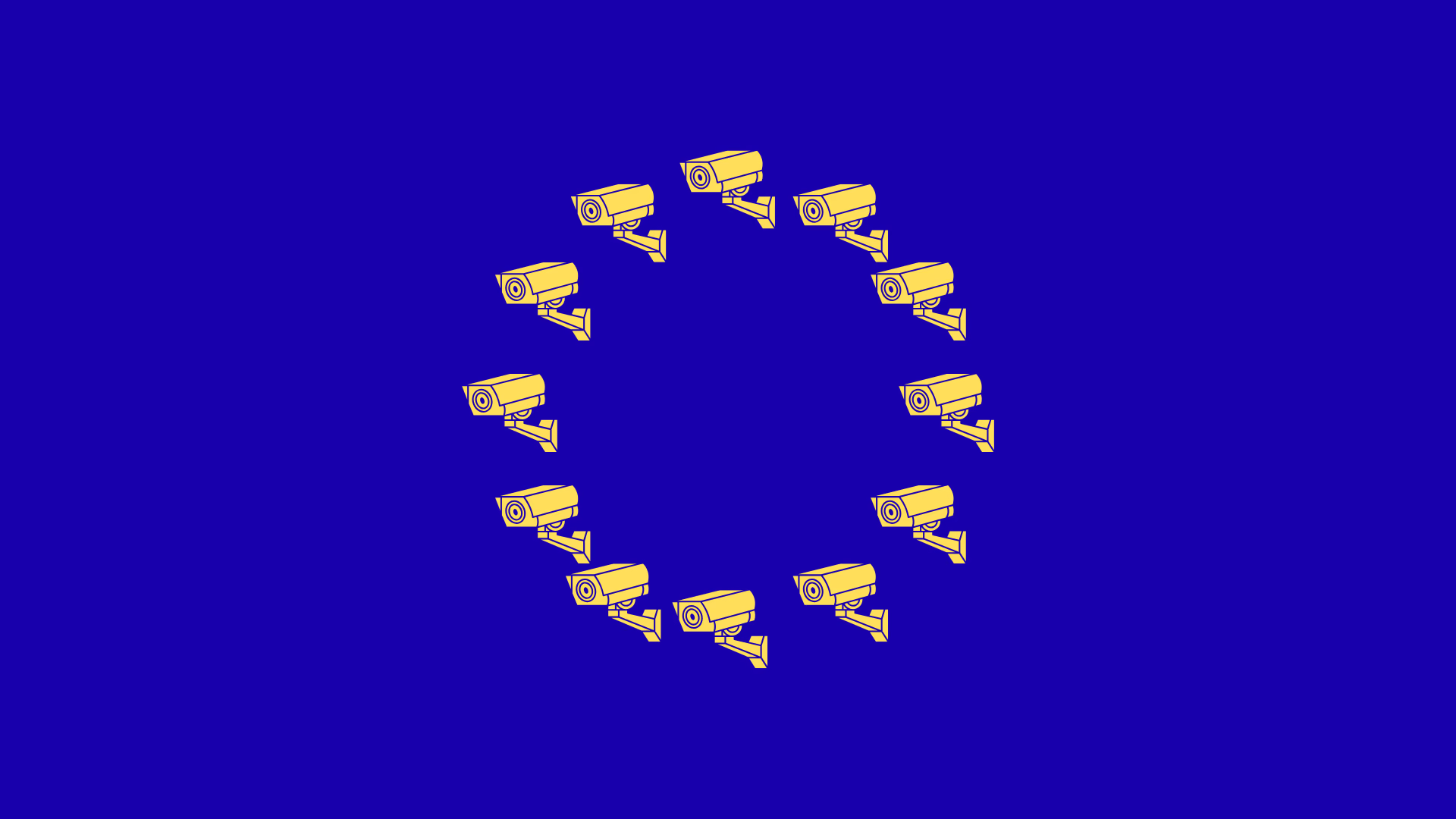
An ordinary notification
Yesterday, I was doing what I usually do: working on my projects, checking a few things in Google Play Console and making sure everything was in order. Nothing particularly interesting. Just another afternoon working on software, dealing with the usual developer tasks that nobody really talks about unless something breaks.
Then I noticed a notification.
Google was asking me to classify myself as either a trader or a non-trader. Fair enough, I thought. I understand why they need to know. If you are selling something commercially, there should be some way of identifying you as a business. Nothing particularly controversial about that.
But I decided to look a little further into what declaring myself a trader would actually involve. And that's when things got interesting.
One of the requirements caught my attention: my postal address could be displayed publicly on Google Play.
I read that again. My address. Publicly available.
Now, I don't have a corporate office somewhere in Barcelona, a registered commercial building or separate premises where I conduct business. I'm an independent developer. I work from home, and my home is also where I develop my software. Those two things are not exactly separate.
So, naturally, I started wondering what would happen if I decided to commercialise my work. Would I have to make the place where I live publicly accessible just to distribute an application through Google Play?
For now, I declared myself a non-trader, which reflects my current circumstances. That doesn't mean I'll necessarily remain one. If my projects grow and I start operating commercially, I'll have to revisit the situation. But the whole thing left me with a rather uncomfortable question: why should becoming a legitimate independent developer potentially require publishing your home address to the entire internet?
Then I opened Reddit
I wanted to know whether this was simply an issue with Google's implementation or whether other developers had encountered the same situation. So I started looking through Reddit, particularly discussions among independent developers dealing with the same trader verification requirements.
It didn't take long to find people raising similar concerns.
Developers from different countries were questioning the possibility of having their residential addresses displayed publicly, discussing the implications for their personal security and wondering why operating a legitimate software business should involve exposing their private homes. Some were concerned about harassment, others about their families, and others simply couldn't understand why there wasn't a more sensible alternative.
What initially seemed like an isolated inconvenience in my developer dashboard was apparently part of a much broader discussion.
And that was probably the moment when I stopped looking at this as just another Google Play requirement. There were people experiencing similar frustrations across the developer community, all trying to navigate a system that seemed to make very little distinction between an independent person working from home and an established company with dedicated commercial premises.
I found that particularly interesting because the issue wasn't necessarily opposition to verification itself. Most of the discussion revolved around something much simpler: why does verifying a trader have to involve making their residential information public?
That question eventually led me somewhere beyond Reddit and Google Play Console. It led me to the legislation behind the requirement.
Brussels enters the conversation
The European Union's Digital Services Act, specifically Article 30, establishes trader traceability requirements for online platforms that allow consumers to conclude distance contracts with traders.
The reasoning is relatively straightforward. Consumers should be able to identify the businesses they are buying from. Platforms should collect relevant information and make certain details available, helping to prevent fraudulent activity and ensuring commercial accountability.
And honestly, I don't disagree with that objective.
If someone is selling software, products or services, consumers should have some way of knowing who they're dealing with. Nobody wants a marketplace full of anonymous businesses that can disappear overnight after taking people's money.
However, legislation and implementation are two different things.
Article 30 establishes requirements concerning trader identification and the availability of certain information. It does not mean that every detail of Google's verification process is dictated word for word by Brussels. Google still makes decisions about how its platform implements those obligations, including how information is collected, verified and presented.
That distinction matters because it means responsibility cannot simply be transferred from one party to another.
Google operates the marketplace and determines much of its practical implementation. The European Union establishes the regulatory framework within which that marketplace operates. Both have a role in the outcome, and both should be willing to examine whether the result is proportionate.
The same broader discussion applies to Apple and its developer ecosystem. Both companies control distribution infrastructures that are essential to reaching enormous numbers of consumers. For independent developers, these platforms are often fundamental to accessing their markets.
And this is where the relationship becomes particularly interesting. Google and Apple are among the most powerful technology companies in existence, yet they operate within a European regulatory environment that increasingly dictates the conditions under which their ecosystems function. They adapt, negotiate, comply and ultimately pass much of the resulting complexity down to the people using their platforms.
The companies have the resources to absorb this process. The independent developer does not.
Privacy has a rather inconvenient exception
What's particularly interesting is that this is happening in Europe.
The European Union has spent years presenting itself as one of the world's strongest defenders of digital privacy. The GDPR became an international reference point, and European institutions constantly emphasise how important it is to protect personal information from unnecessary exposure.
Yet the practical consequences of certain commercial transparency requirements can create precisely the kind of exposure that privacy legislation is supposed to make us consider carefully.
A residential address isn't just another administrative detail. It identifies a physical location. Unlike an email address or a business telephone number, it can tell someone exactly where another person lives.
And once that information reaches the internet, its distribution is no longer entirely under the control of the person who originally provided it. Search engines can index it, third parties can copy it and archives can preserve it long after the original information has changed.
The contradiction isn't that European privacy legislation and commercial transparency requirements cannot coexist. They obviously can. The problem is that they need to be designed together, rather than treating privacy as an afterthought whenever another regulatory objective becomes involved.
There is a difference between requiring a trader to be accountable and making their private life unnecessarily accessible.
I find it difficult to understand why that distinction should be controversial.
Not everyone has a legal department
The address issue also exposes a much larger problem with the way digital regulation affects independent businesses.
A multinational corporation and an individual developer may technically operate under the same regulatory framework, but their ability to comply with it is radically different.
A company like Google can employ entire legal departments dedicated to regulatory compliance. It can hire external consultants, establish offices in different jurisdictions and distribute administrative expenses across a business generating billions in revenue.
Now consider someone developing an application independently.
That person might be responsible for the code, interface, servers, customer support, marketing, updates and everything else involved in maintaining a product. They don't have a legal department waiting in another office. If a regulatory requirement appears, they have to understand it themselves, determine what applies to their circumstances and figure out how to comply.
This creates a structural imbalance.
Every additional administrative requirement takes time away from development. Every additional expense makes commercialisation slightly more difficult. Even when an individual obligation seems relatively minor, the cumulative burden can become substantial.
And the issue isn't exclusive to residential addresses. It concerns the broader assumption that the same practical requirements can be imposed on businesses operating under completely different conditions without considering the consequences.
I'm not suggesting that independent developers should be exempt from regulation. A small business can still deceive consumers, misuse personal information or engage in fraudulent practices. But proportionality should mean something.
Applying the same principles to everyone is not necessarily the same as treating everyone fairly.
Imagine actually making it
There's another dimension to the problem that I find particularly concerning: the consequences of information disclosed before someone becomes successful.
Imagine someone who starts developing an application at sixteen or seventeen. They work on it after school, spend weekends fixing bugs and gradually turn a small project into something commercially successful. Eventually, the application takes off. It attracts thousands, perhaps millions, of users. The developer starts generating substantial revenue and becomes a recognisable name within their industry.
That's the dream, isn't it?
Now imagine that, somewhere along the way, they had to publish their residential address to satisfy a commercial verification requirement.
At the time, the application was practically unknown. Nobody particularly cared who developed it, and the possibility of becoming a successful entrepreneur seemed distant. Publishing an address might have appeared to be a minor administrative inconvenience.
Years later, the circumstances are completely different.
The developer's public profile has grown, their financial situation has changed and their work attracts considerably more attention. Someone could connect their public identity to their residential location and use that information for purposes that have absolutely nothing to do with consumer protection.
Unwanted visits, harassment, scams or even theft become possibilities that the developer might never have considered when initially publishing the information.
Their success would have increased their visibility, while information disclosed years earlier could make their private life easier to access.
Of course, this is a hypothetical scenario, not a claim that every successful developer will experience these problems. But it illustrates why personal information should be treated carefully before being made publicly accessible.
The internet has a particularly inconvenient characteristic: information can outlive the circumstances that justified publishing it.
A developer can change their business structure, move to another property or establish a registered office. That doesn't guarantee that previously distributed information will disappear.
The point is not that successful businesses should be allowed to hide their identities. It is that the system should account for the possibility that an individual's professional circumstances and personal security requirements can change considerably over time.
Europe wants technological sovereignty. Does it want developers?
What makes all of this even more frustrating is the European Union's constant discussion about technological sovereignty.
Brussels wants European companies to compete with American and Chinese technology giants. It wants more investment, more innovation, more startups and a stronger European digital economy.
Fair enough. I want that too.
But where exactly do these companies come from?
They don't magically appear with hundreds of employees, millions in funding and a legal department. They start with individuals. People experimenting with ideas, writing applications, building products and trying to turn something they created into an actual business.
That's how technology ecosystems grow.
If the path from independent developer to legitimate entrepreneur becomes unnecessarily complicated, some people will simply decide that it isn't worth the effort. Others might choose different markets, distribution channels or jurisdictions where establishing a business is more straightforward.
And software developers have something particularly important in this regard: mobility.
You can build an application from Barcelona, sell it in the United States and host its infrastructure somewhere else entirely. Your customers don't necessarily care where you live, and your business doesn't necessarily need a traditional physical office.
Europe should not assume that independent developers will automatically remain within its ecosystem regardless of the conditions it creates.
Technological sovereignty cannot simply mean demanding that European companies become more competitive while making it harder for the people who might build them to get started.
No single regulation will determine the future of European technology. But administrative complexity, legal uncertainty and disproportionate compliance requirements can accumulate into an environment where starting something becomes harder than it needs to be.
If Europe genuinely wants to compete globally, it needs to consider the conditions under which its next generation of technology companies will emerge.
There is a better way
I don't think this is an especially complicated problem to address.
Platforms should be able to verify the identity of commercial developers without unnecessarily exposing their residential addresses. European regulators should recognise that a registered commercial address and an individual's home are not interchangeable.
A verified business contact, an appropriate alternative address or another secure communication method could provide consumers with meaningful ways to contact traders without requiring everyone operating from home to make their residence publicly discoverable.
This would preserve the objectives of commercial transparency while reducing unnecessary exposure.
And importantly, this doesn't require abandoning the Digital Services Act. It requires examining whether the practical implementation of its objectives makes sense for the people affected by them.
Google has the resources to develop a more thoughtful verification process. Apple has the infrastructure to consider how its own developer ecosystem handles similar obligations. European regulators have the institutional capacity to examine whether their requirements produce disproportionate consequences.
The technical possibilities are not particularly difficult to imagine. What matters is whether the institutions and companies involved are willing to prioritise them.
Anyway, back to Google Play Console
Yesterday, I opened a developer dashboard expecting to deal with the usual things. Updates, application management, technical information and all the other relatively boring tasks involved in maintaining software.
Instead, I ended up thinking about European regulation, residential privacy and what it actually means to become an independent technology entrepreneur in Europe.
It's quite an interesting detour for a notification.
I understand why Google needs to distinguish between traders and non-traders. I understand why the European Union wants consumers to be protected. And I certainly don't believe developers should be allowed to operate commercially without any accountability.
But there is something fundamentally wrong when a person trying to build a legitimate business has to consider whether doing so could expose their home address to the public.
Google and Apple are powerful enough to navigate almost any regulatory environment. They have the lawyers, the resources and the infrastructure to deal with Brussels. Independent developers don't have that luxury. They are the ones who end up navigating the consequences, often without having any meaningful influence over the decisions that created them.
Europe keeps talking about the next generation of technology companies. It talks about innovation, entrepreneurship and digital independence.
Perhaps it should spend a little more time considering the people who are supposed to build them.
Because if becoming a successful developer means choosing between commercialising your work and protecting your own home, something has gone seriously wrong.
streaming rents you back your own taste. kleos music hands it to you — and keeps it on your phone.